Welcome to the MSDM Programme
Marine ecosystems in Europe and across the globe face increasing pressure from climate change and human activities. Ireland’s maritime territory—one of the largest in Europe—is uniquely positioned to serve as a hub for understanding these dynamic marine socio-environmental systems.
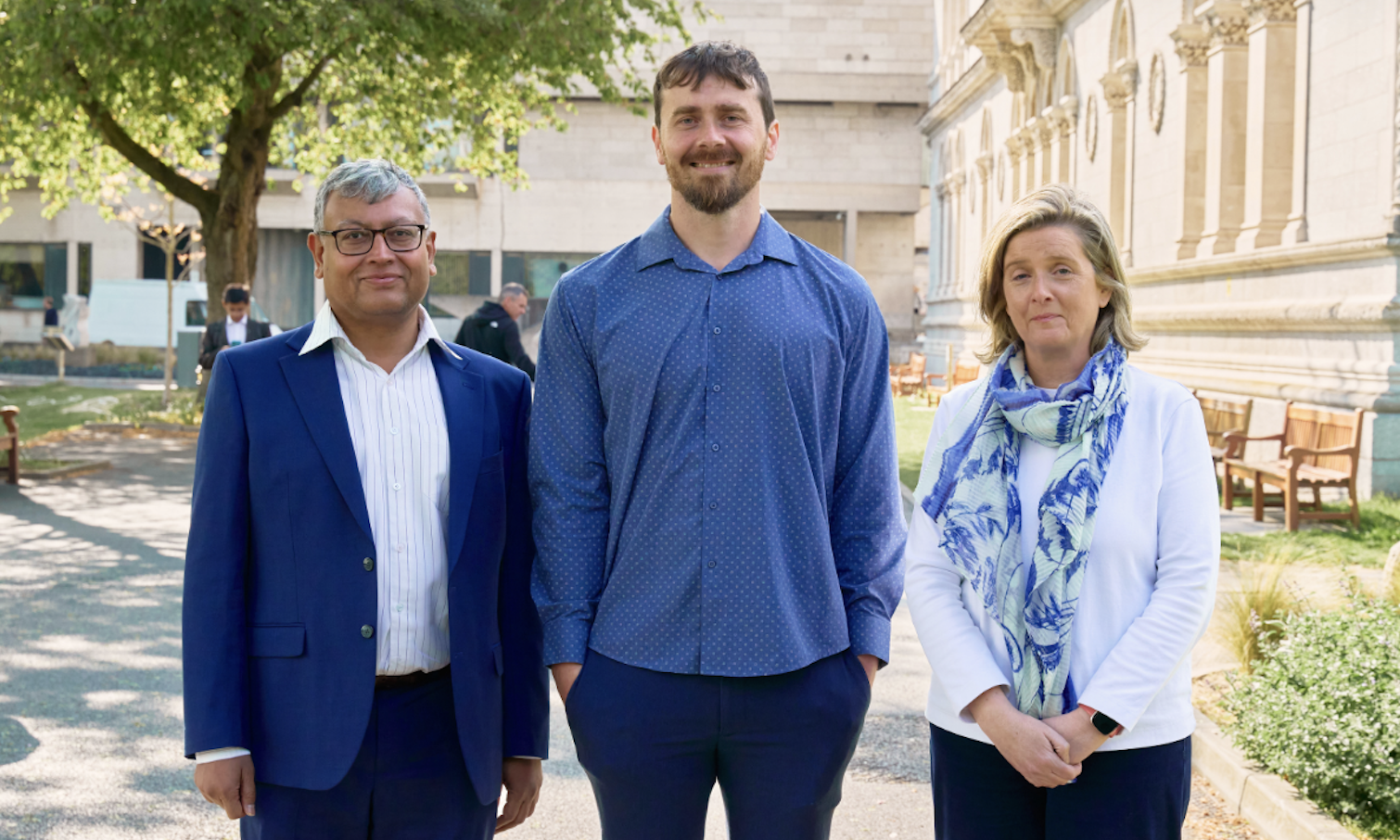
The Marine Species Distribution Modelling (MSDM) Programme is a 48-month Choose Europe for Science COFUND fellowship initiative based at Trinity College Dublin (TCD) in the Schools of Natural Sciences and Engineering. Co-funded by the AIB Trinity Climate Hub, MSDM brings together marine spatial ecology, physics, physiology, oceanography, and climate science to understand and predict the distributions and abundances of key marine species under diverse climate scenarios.
Recruited fellows will lead independent, open-ended research projects that combine cutting-edge science with real-world conservation, marine spatial planning, and policy applications.
Our Commitment to Diversity, Equity, and Inclusion (EDI)
We actively encourage applications from candidates of all backgrounds, genders, ethnicities, ages, sexual orientations, disabilities, and family/civil statuses. We are committed to maintaining an open, transparent, inclusive, and merit-based selection process free from bias.
Notice to Applicants: Please ensure your application materials use gender-neutral language and avoid age-identifying details in your Narrative CV and proposal to help us maintain an unbiased evaluation process.
Informational Webinar
We will be running an informational webinar at 1PM IST the September 18th where you will be able to ask questions live. You can register for the event below:
To apply for an MSDM Fellowship, you must meet the following core MSCA Choose Europe COFUND eligibility criteria at the call deadline:
- Doctoral Degree: You must have successfully completed your PhD degree prior to the application deadline.
- MSCA Mobility Rule: You must not have resided or carried out your main activity (work, studies, etc.) in Ireland for more than 12 months in the 36 months immediately prior to the call deadline.
- Employment Status: You must not be currently employed on a permanent basis at Trinity College Dublin at the time of your application.
The call is now open and will close on October 10 at 12:00 pm Irish Standard Time. A webinar for applicants will be held in the first month of call opening (date and time TBD). External expert review will occur in the month following the closing of the call and interviews conducted in November. The selection process will finish by November with selected postdoctoral fellows starting in December or shortly after.
Fellows will be full-time employee researchers at Trinity College Dublin, receiving highly competitive remuneration that exceeds standard national postdoctoral research scales:
- Competitive Gross Salary: An attractive before-tax salary of approximately €78,937 per year (inclusive of a €5,990/month living allowance adjusted by Ireland’s 136.4% correction coefficient, plus a €710/month mobility allowance).
- Additional Allowances:
- Family Allowance: €330/month (for fellows with qualifying family or carer responsibilities).
- Research Costs: €700/month dedicated to individual project implementation.
- Travel & Mobility Allowance: €300/month for attending international conferences, field studies, and secondment trips.
- Specialised Training Budget: €275/month for Hub retreats, leadership courses, and skills workshops.
- Working Hours & Leave: Standard 38-hour work week with flexible working options, 22 days of annual leave, statutory holidays, and paid parental, carer’s, and sick leave.
- Pension & Social Welfare: Auto-enrollment into Trinity’s Single Public Service Pension Scheme and full eligibility for Irish national social welfare benefits.
- Institutional Support: Dedicated office/lab space in TCD’s Schools of Natural Sciences or Engineering, computer labs, high-performance supercomputing access (ICHEC), and full library rights.
- Relocation Support: Support from TCD HR and EURAXESS Ireland regarding visas, hosting agreements, housing advice, and family relocation.
- Duration: Fellowships are granted for 48 months (split into Phase 1: 24 months and Phase 2: 24 months).
- Location & Mobility: Fellows will be physically based at Trinity College Dublin, Ireland, but may undertake collaborative research visits or secondments with partner agencies, industries, or NGOs.
- Reporting & Living Documents:
- Career Development Plan (CDP): Co-developed with supervisors within the first 6 months and updated annually.
- Mentorship Agreement: A formal agreement defining expectations, work-life balance, and professional goals.
- Data Management Plan (DMP): Project data must comply with FAIR principles and open-access mandates (Plan S).
- Ethics Approval: Projects involving animal handling or ocean sampling must secure all necessary HPRA licenses and research permits prior to field operations.
Fellows will be assigned a Primary and Secondary Supervisor from among five principal investigators spanning ecological science, oceanography, thermal fluid dynamics, and computational dynamics:
- Assist. Prof. Thomas Connor (School of Natural Sciences – Zoology)
Quantitative ecologist focused on macroecology, species distribution modeling, population dynamics, and applied conservation science.
TCD profile / MSDM Profile - Prof. Nessa O’Connor (School of Natural Sciences – Zoology)
Expert in experimental marine ecology, coastal climate impacts, and nature-based solutions.
TCD profile / MSDM Profile - Assoc. Prof. Nicholas Payne (School of Natural Sciences – Zoology)
Specialist in fish physiological ecology, animal biologging/telemetry (sharks, tunas), and climate sensitivity.
TCD Profile / MSDM Profile - Assoc. Prof. Tim Persoons (School of Engineering – Mechanical Engineering)
Expert in thermal fluid sciences and computational fluid dynamics. Brings physics-based heat transfer and flow modelling expertise.
TCD Profile / MSDM Profile - Prof. Biswajit Basu (School of Engineering – Chair Professor of Computational Dynamics)
Expert in 3D ocean current dynamics, thermodynamics, fluid-structure interactions, and quantum dynamics algorithms.
TCD profile / MDSM Profile
Candidates must use the standardized templates provided below for submission through email to connorth@tcd.ie with subject line “MSDM application” preceded by the candidate’s last name (e.g. “Smith MSDM application”). In addition to CV, proposal, and ethics self-assessment, include the details of two references and preferred supervisor(s) from the project team.
- Narrative CV Template (DORA Compliant)
Focus: Qualitative descriptions of achievements, key contributions to knowledge, leadership skills, and collaborative outputs rather than journal impact factors or h-indexes ( example template) - Research Proposal Template (MSCA Guidelines)
Focus: Maximum 10 pages following MSCA Postdoctoral Fellowship structures (1. Excellence, 2. Impact, 3. Implementation, in the format of part B-1: link). Please note, you do not need to fill in section 1.3 quality of the supervision or section 3.2 on the quality of the host institution. - Horizon Europe Ethics Self-Assessment: link
The selection process strictly follows the European Charter and Code for Researchers and CoARA principles across three transparent steps:
[ Step 1: Eligibility & Ethics Check ]
⬇
[ Step 2: Remote Expert Peer Review (2 or more External Reviewers) ]
⬇
[ Step 3: Remote Live Interview Panel ]
⬇
[ Final Merit Ranking & Offer ]
Evaluation Criteria & Weighting
Applications are scored from 0 (insufficient) to 5 (outstanding), with a minimum threshold score of 3 required in each section to advance:
- Remote Written Review (Weighting: 50% of final rank)
- Excellence (50% weight / Threshold 3.0): Ambition, novel methodology, interdisciplinary approaches, open science practices.
- Impact (30% weight / Threshold 3.0): Career progression plan, dissemination and engagement strategy, scientific/societal relevance.
- Implementation (20% weight / Threshold 3.0): Work plan feasibility, risk management, resource allocation.
- Live Interview Evaluation (Weighting: 50% of final rank)
- Shortlisted candidates (top 12) present their project to a gender-balanced panel.
- Evaluated on Motivation & Excellence (50%), Expertise & Technical Q&A (30%), and Presentation & Communication (20%).
Feedback & Redress
All candidates will receive written evaluation summary reports detailing their scores and qualitative reviewer feedback. Applicants who suspect an administrative error or procedural inconsistency during evaluation may submit a formal request to the independent Redress Committee within 14 days of decision notification.
This page is designed to comply with W3C Web Content Accessibility Guidelines (WCAG 2.1 AA). All text features high contrast, clear heading hierarchies, screen-reader compatibility, and descriptive hyperlink text. If you require application documents in an alternative accessible format (e.g., large print, screen-reader optimized PDF), please contact our management team.
Programme Contact Email: soroudim@tcd.ie
Host Institution: Trinity College Dublin, College Green, Dublin 2, Ireland